Postmortems that
actually get written.
Runframe generates a structured draft from the incident timeline. Your team adds root cause and action items. No blank docs two weeks later.
The timeline becomes the draft
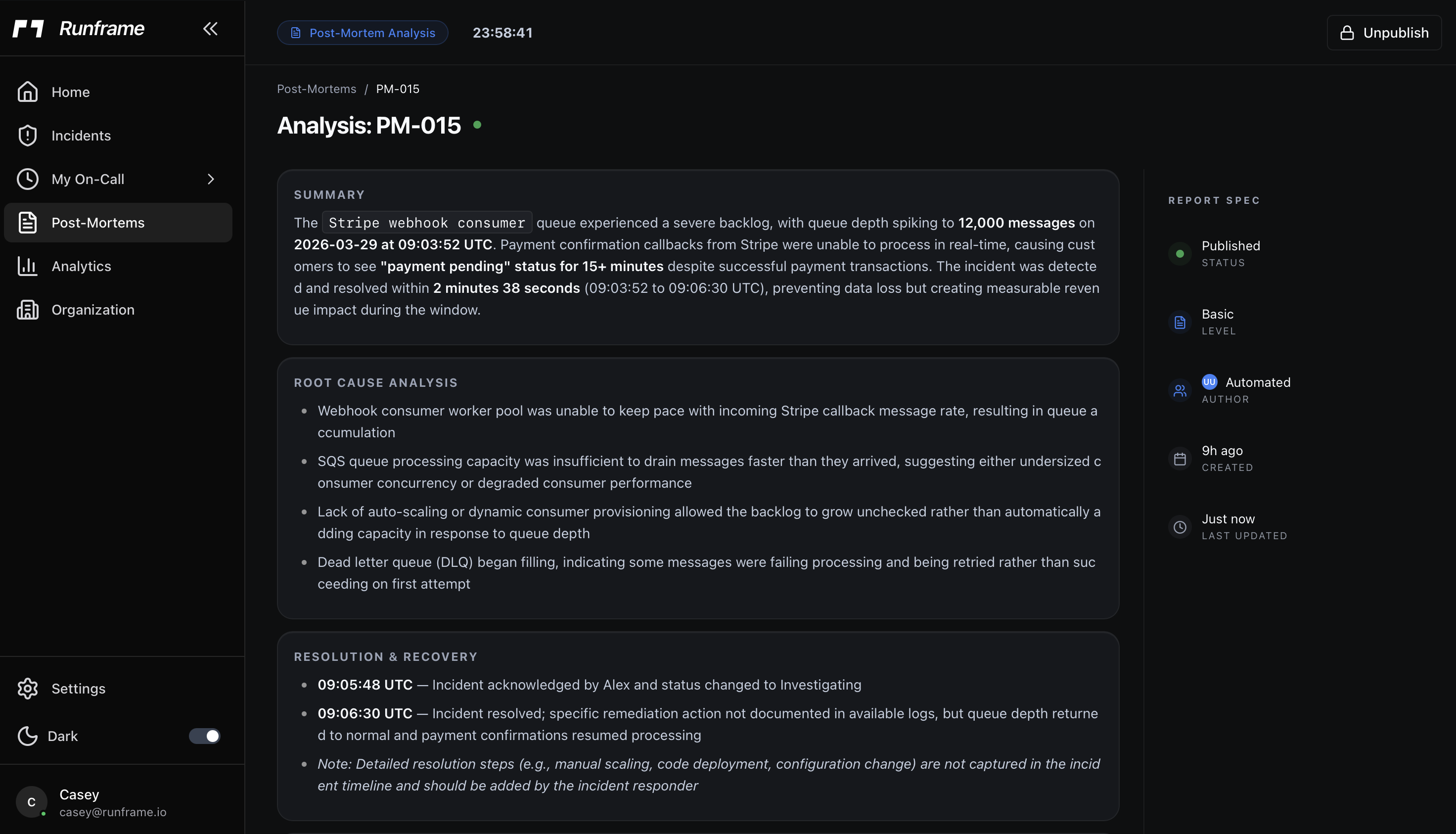
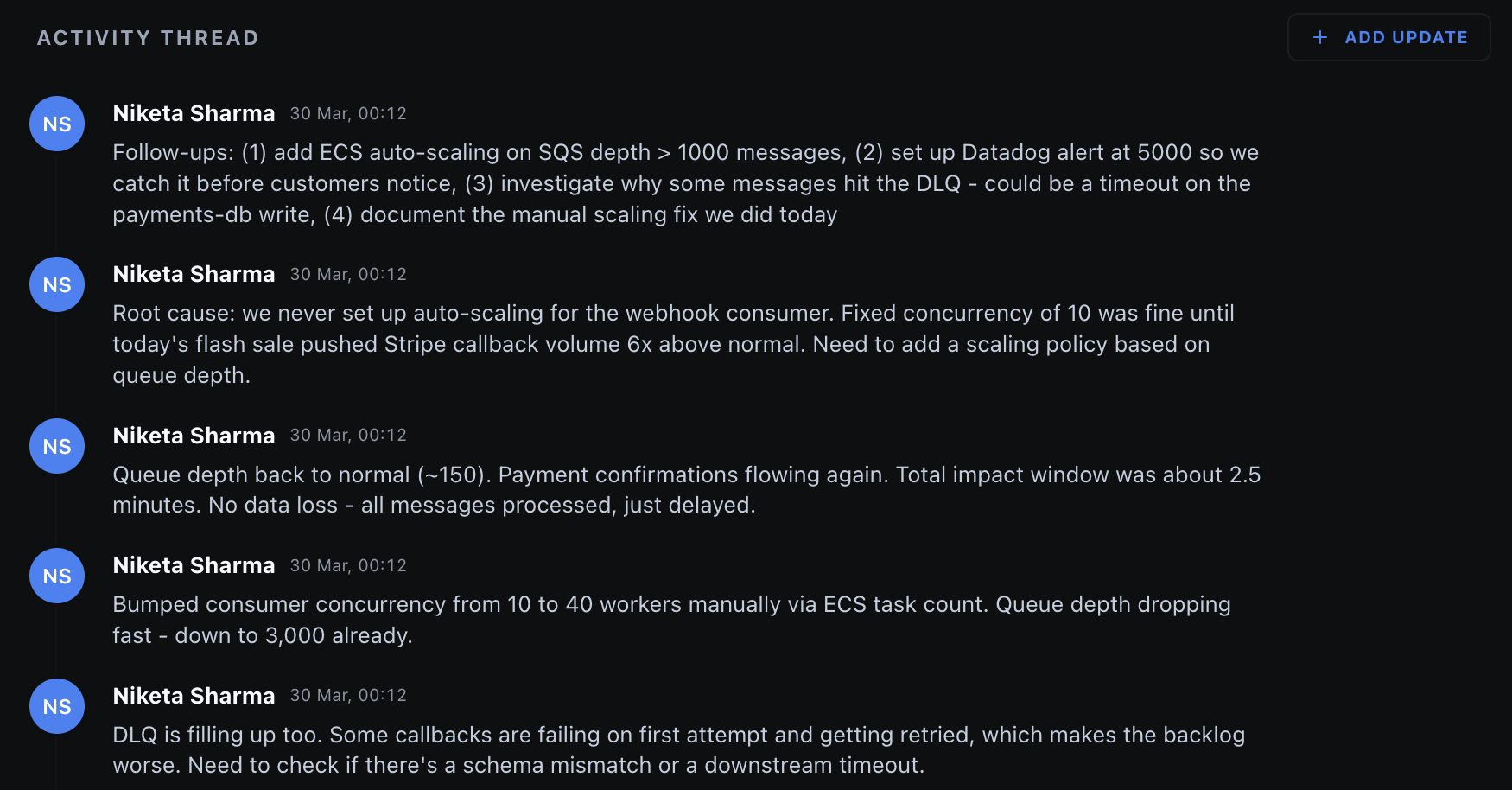
Every status change, escalation, role assignment, and engineer comment gets logged during the incident. When you resolve, Runframe compiles all of it into a postmortem draft. Summary, timeline, and impact are pre-filled. Your team adds root cause and action items on top of a document that already has the full play-by-play.
Pick a maturity level that fits your team
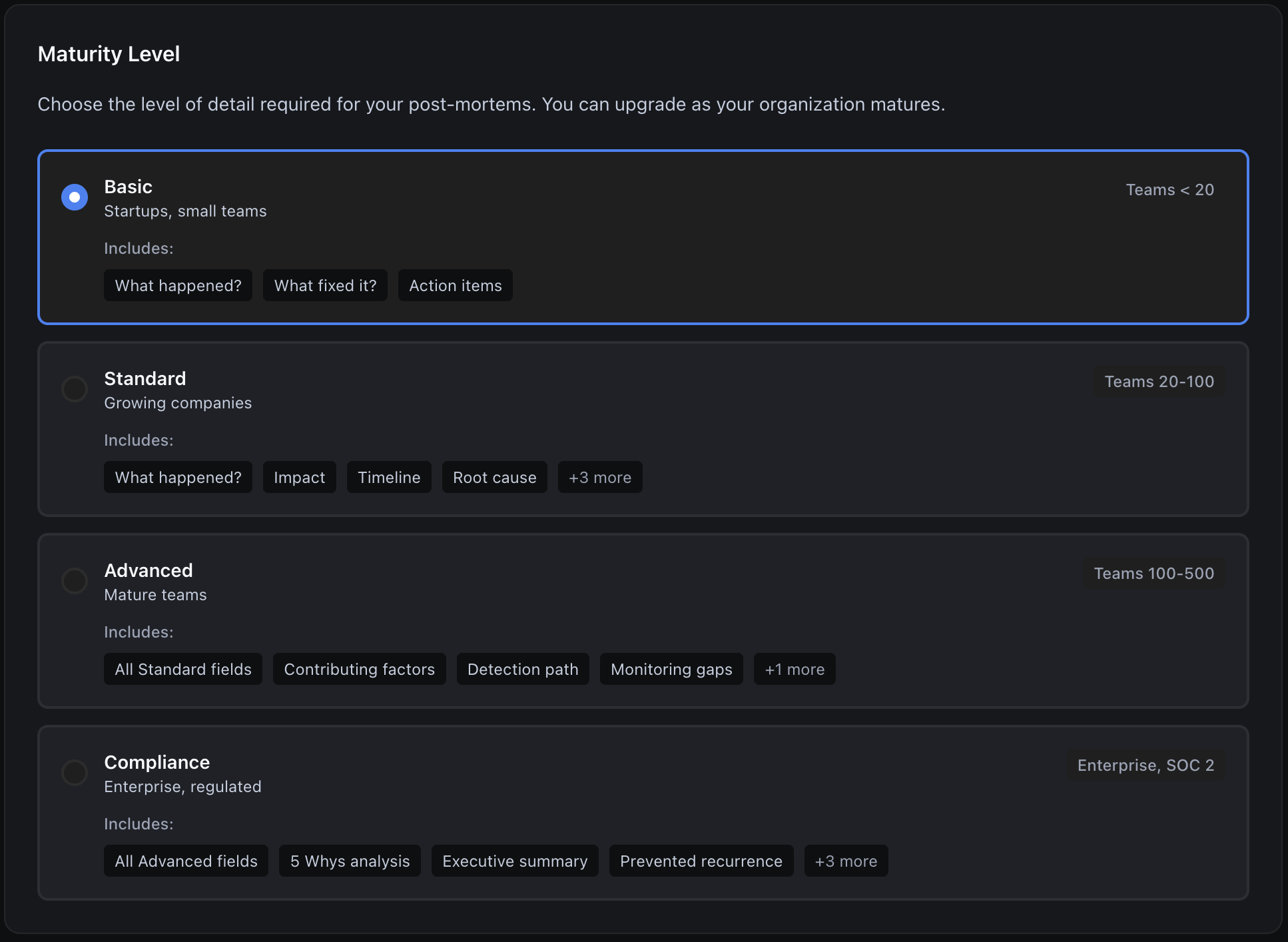
Four presets from Basic (startups, 3 sections) to Compliance (enterprise, SOC 2 fields). Start simple and upgrade as your process matures. Each level adds more structure: contributing factors, detection path, monitoring gaps, 5 Whys analysis. You're not locked in - switch anytime.
0 sec
Draft ready when you resolve
4 levels
Basic to Compliance
100%
Timeline events captured