Slack-native coordination.
Multi-channel delivery.
Wake the on-call responder by phone. Send the incident by SMS. Coordinate in Slack. Back it up with email.
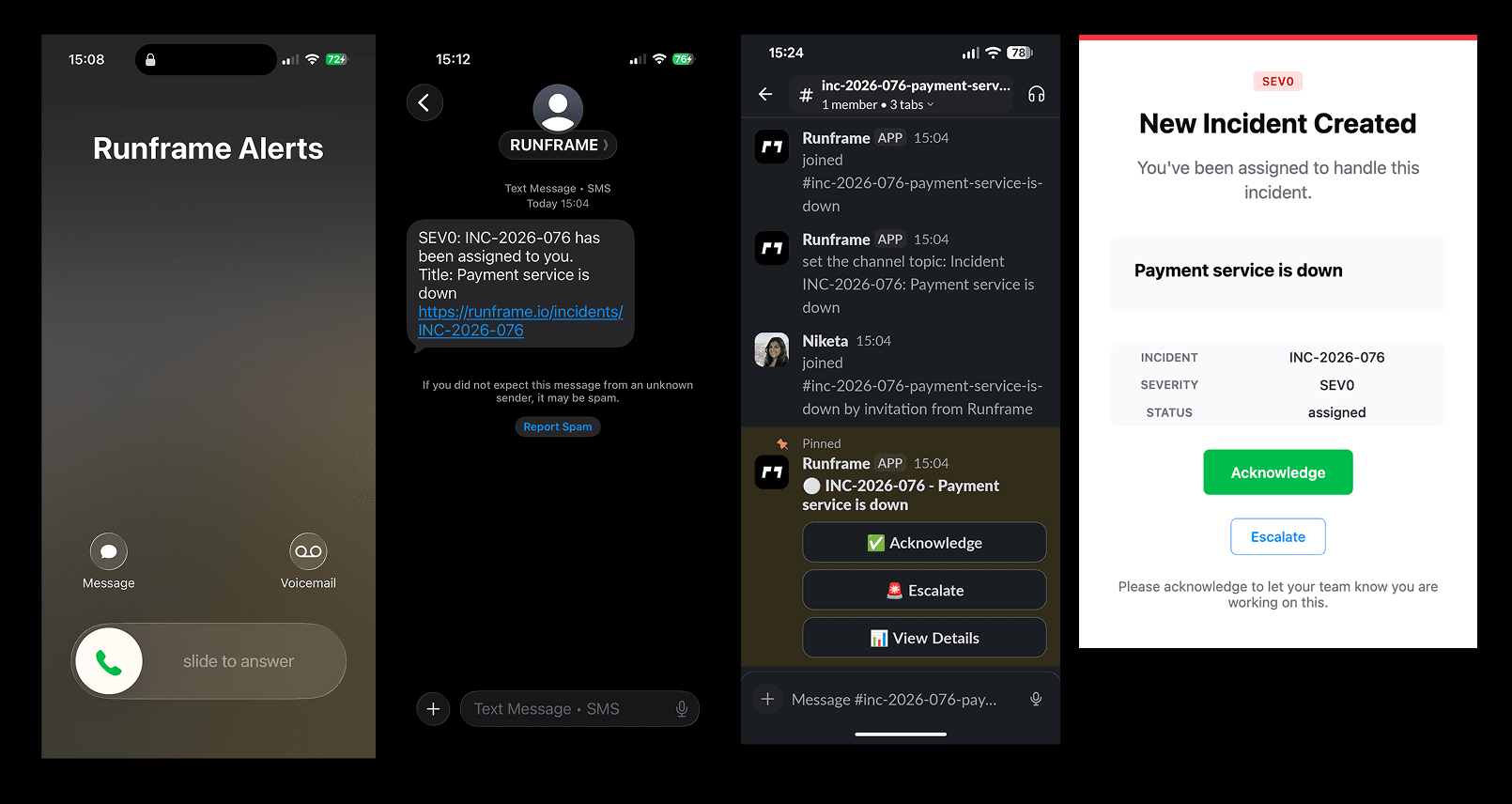
One incident, four delivery paths
Phone Calls
Wake-up-now delivery for serious incidents and after-hours escalation.
SMS
Short incident context with a direct link to respond fast from anywhere.
Slack
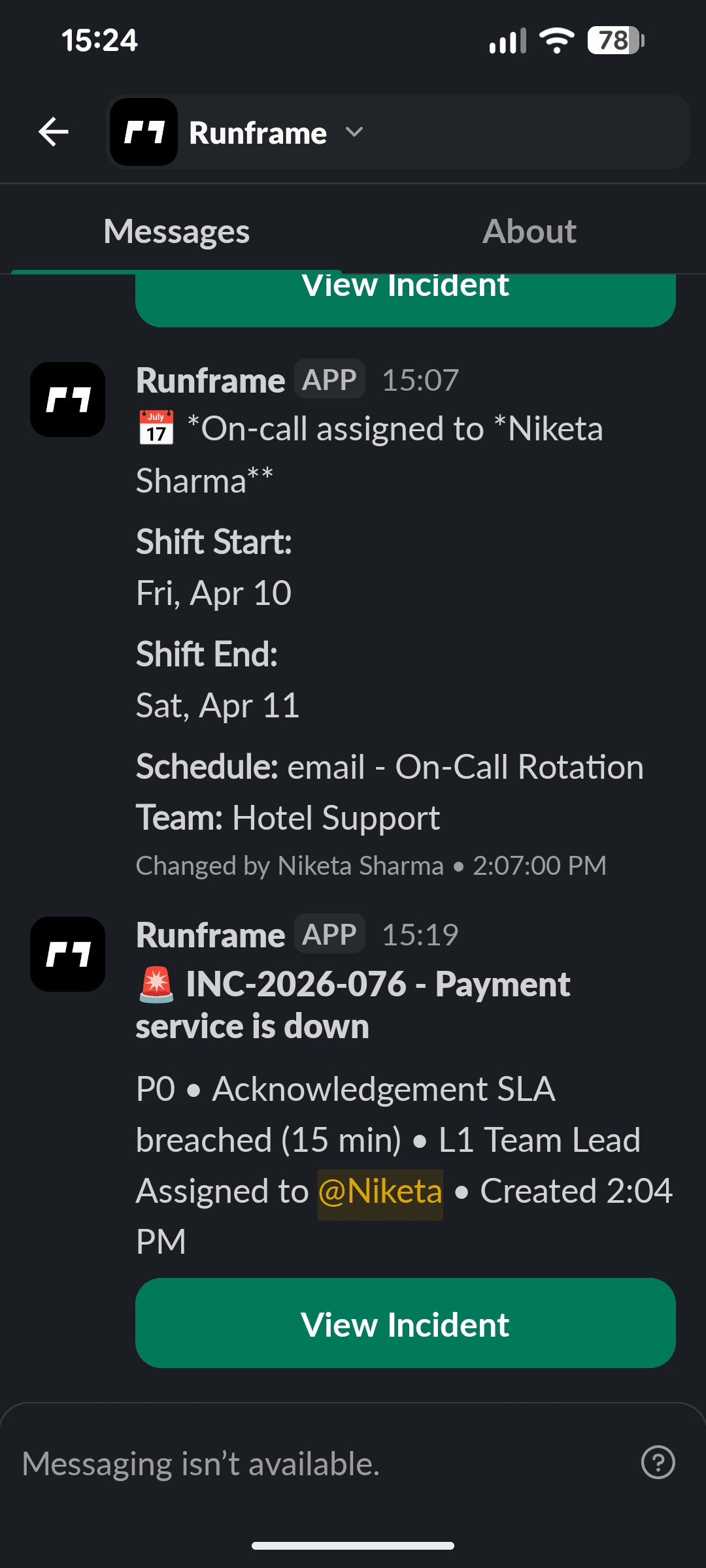
Acknowledge, escalate, and coordinate in the tool your team already uses.
Structured backup with severity, escalation level, and incident details.
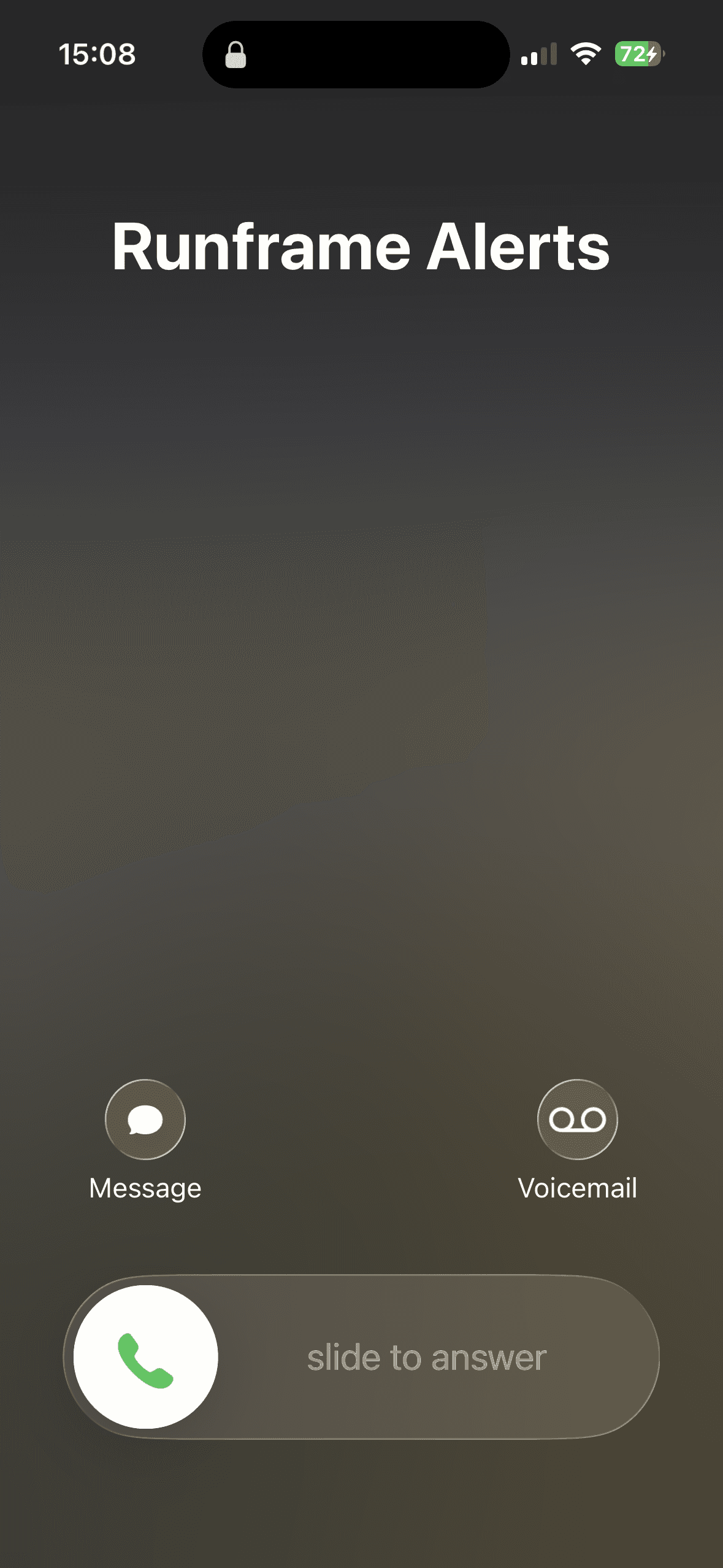
Use calls for the alerts that cannot be missed
Some incidents should not depend on a badge count or an unread message. Phone calls are the hard-stop channel for urgent incidents and after-hours escalation. When the situation is serious, Runframe can ring the responder directly and keep the escalation moving until someone picks it up.
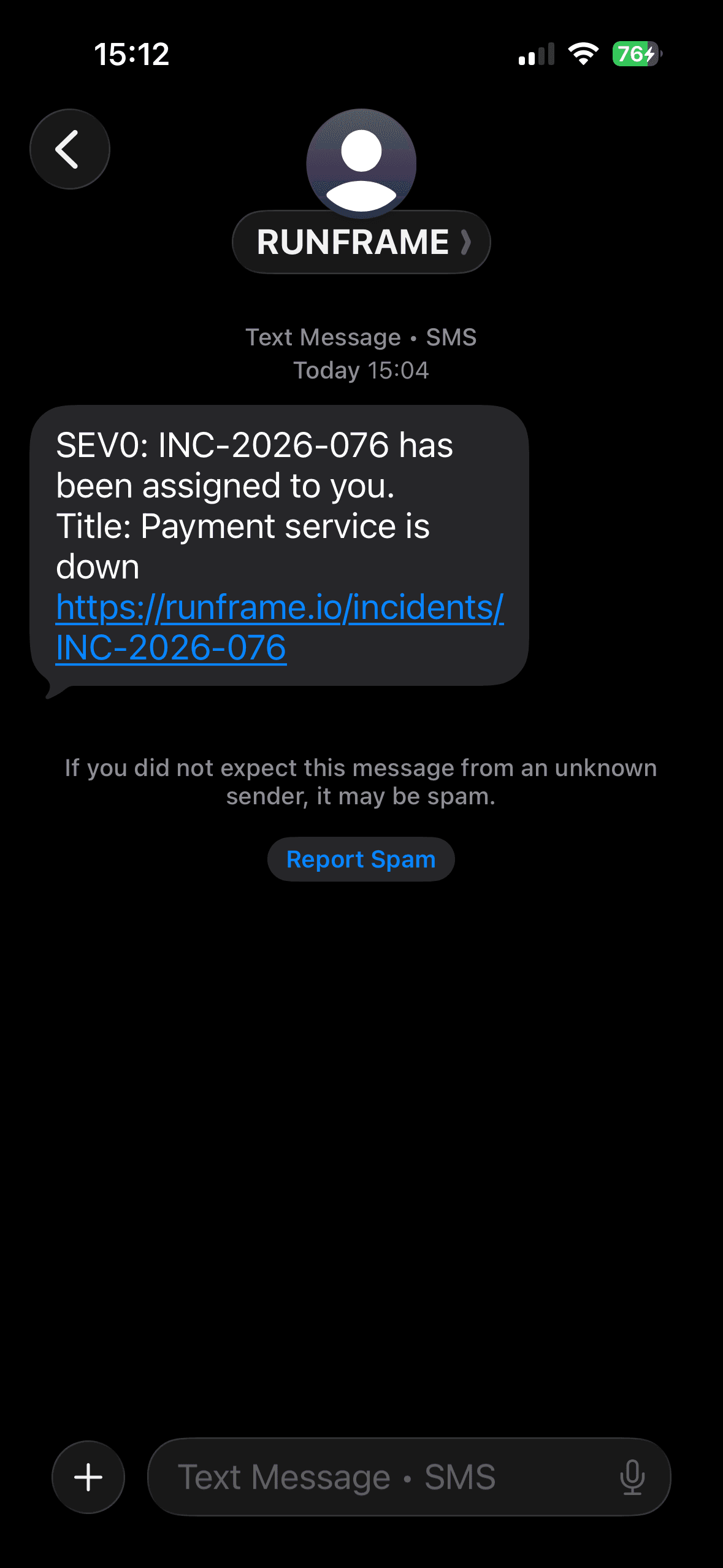
When Slack is missed, the alert still lands
Real incidents do not wait for someone to notice a Slack badge. If the responder is away from their laptop, asleep, or deep in another page storm, Runframe can still reach them by text or phone call. That is the difference between a nice workflow and an actual paging system.
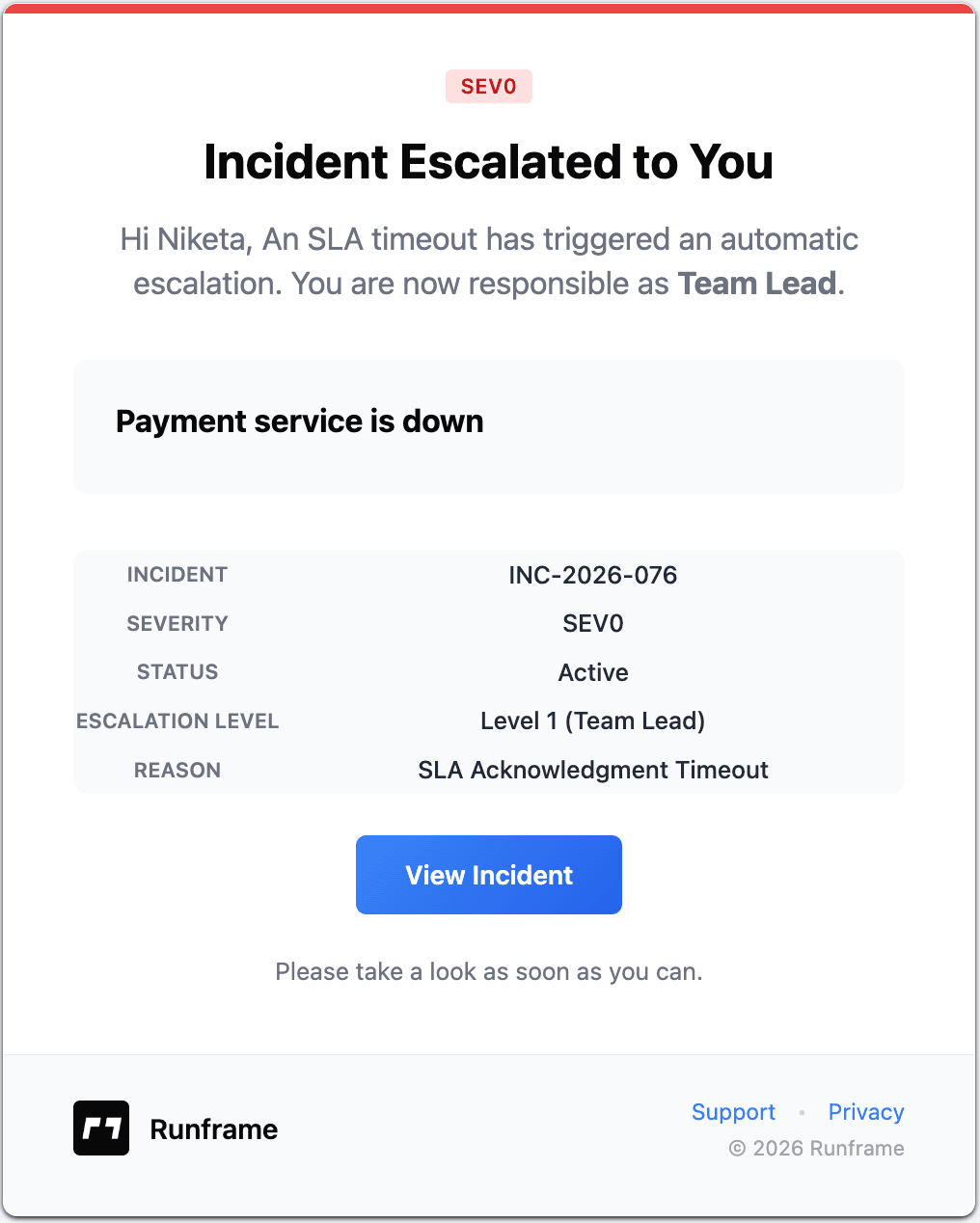
Escalation is built into delivery
If the primary responder does not acknowledge in time, Runframe escalates automatically. Backup responders can get a Slack DM, a phone call, or an escalation email with the severity, escalation level, and reason. Nobody has to manually chase the chain once the SLA timer is breached.
Responders still get one clean place to work
Delivery can be multi-channel without the workflow becoming fragmented. Slack DMs can carry the assignment, on-call shift context, and a direct path back into the incident. The result is simple: reach people wherever they are, but bring them back into one system to respond.
Frequently asked questions
Stop relying on one channel to save the incident.
Call, text, email, and Slack the right responder from one escalation system.